History of Lenskart: From Online Eyewear Startup to Global Vision-Tech Brand

Lenskart is an Indian eyewear company that sells eyeglasses, sunglasses, and contact lenses both online and through physical stores. It was founded on 19 May 2008 by Peyush Bansal, Amit Chaudhary, and Sumeet Kapahi, and is headquartered in Gurgaon, Haryana, India.
| Lenskart → Founded in 2008 → Eyewear industry → Online-first model → Digital marketing + technology → Offline expansion → Omnichannel growth → Brand success |
Key facts:
◉ Business model: It’s a technology-driven, vertically integrated D2C (direct-to-consumer) eyewear company that designs, manufactures, brands, and retails prescription eyeglasses, sunglasses, contact lenses and accessories through an omnichannel network of stores, apps, and websites
◉ Reach: Lenskart serves 40 million people across more than 1,500 omnichannel stores in 175 cities in India, Singapore, and Dubai, and has expanded further into Southeast Asia, Japan, and the Middle East. Brands: It owns several sub-brands, including John Jacobs, Hustlr, Lenskart Air, Vincent Chase, Lenskart Twyst, Aqualens, and Owndays.
◉ Manufacturing: It runs a large manufacturing facility in Bhiwadi, Rajasthan, with an annual production capacity of about 5 crore (50 million) glasses.
◉ Financials: For FY25, it reported revenue of ₹6,652 crore (about $700 million) and a net income of ₹297 crore (about $31 million).
◉ Public listing: Lenskart got listed on the stock exchange on November 10, 2025, and as of late July 2026 its market cap stood at around $10 billion.
Brand Background & History
➜ How it started
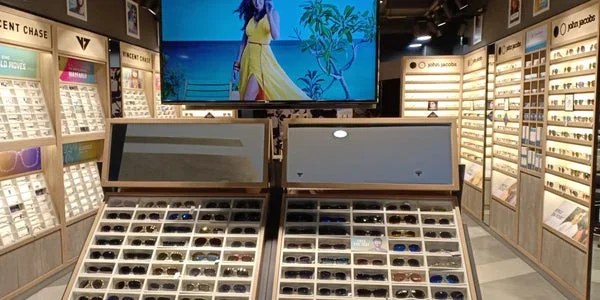
Lenskart was founded in 2008 in Gurgaon, India, by Peyush Bansal along with co-founders Amit Chaudhary and Sumeet Kapahi. Interestingly, the company didn’t start as an eyewear business at all — it began life as Valyoo Technologies, running a college classifieds website called SearchMyCampus.com. It was only after Amit Chaudhary joined as a co-founder in 2009 that the team pivoted toward eyewear, spotting a real gap in the market: buying prescription glasses in India was expensive, inconvenient, and stuck with old-fashioned optical shops.
➜ Solving a real problem
At the time, India’s eyewear industry was largely unorganized — small, local opticians dominated, prices were unpredictable, and there was no easy way to compare options or order from home. Lenskart saw an opportunity to bring transparency and convenience to this space by taking eyewear online.
➜ Going online-first
Lenskart launched as an e-commerce platform, letting people order prescription eyeglasses over the internet — something nobody had really done in India before. Customers could browse frames, upload prescriptions, and get glasses delivered to their doorstep, often at prices far lower than traditional optical stores.
➜ Winning trust through tech and marketing
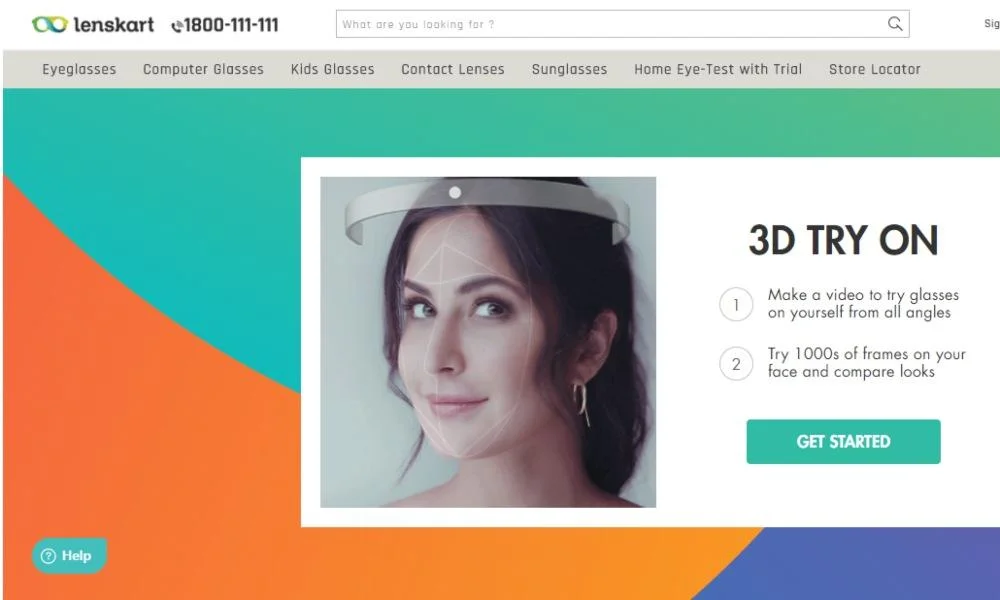
Because buying glasses without trying them on felt risky, Lenskart invested heavily in technology to bridge that gap — things like 3D try-on tools, home eye-checkup services, and a smooth mobile app experience. Alongside this, the company ran aggressive digital marketing campaigns that made “Lenskart” a household name in India.
➜ Moving offline too
As trust grew, Lenskart realized that some customers still wanted a physical place to try on frames and get expert advice. So it began opening brick-and-mortar stores across Indian cities — eventually expanding to more than 1,500 stores across India, Singapore, and Dubai.
➜ Becoming omnichannel
Rather than treating online and offline as separate businesses, Lenskart connected them — a customer could browse online, try frames in-store, and pick up or get delivery seamlessly. This “omnichannel” approach became a big part of its identity and helped it stand out from competitors.
➜ Where it stands today
That journey turned Lenskart into Asia’s largest eyewear company, serving over 40 million customers. It now owns multiple sub-brands (like Vincent Chase, John Jacobs, and Owndays), runs its own large-scale manufacturing facility in Bhiwadi, Rajasthan, and completed its stock market listing (IPO) in November 2025 — a major milestone showing how far it’s come from a small campus-classifieds website in 2008.
Business Model
1. Direct-to-Consumer (D2C), Vertically Integrated
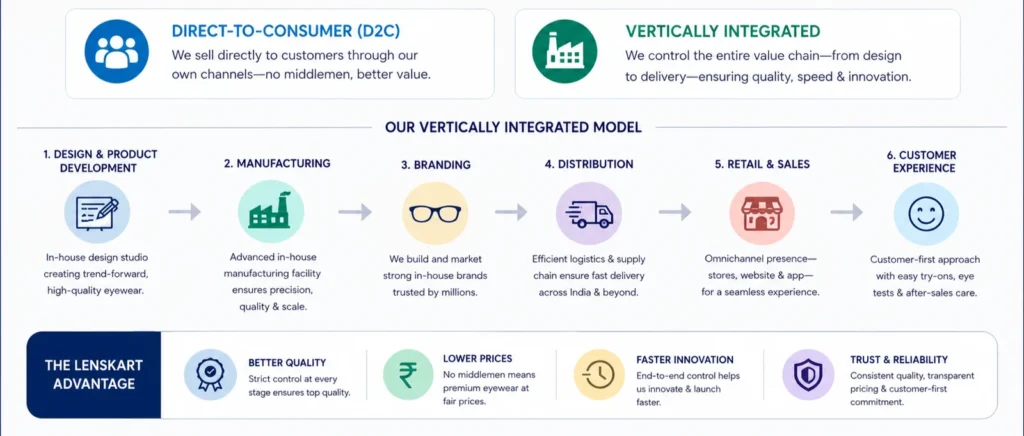
Lenskart doesn’t just sell eyewear — it controls almost the entire process itself, from design to delivery. It:
◉ Designs its own frames and sunglasses
◉ Manufactures them in its own facility (in Bhiwadi, Rajasthan)
◉ Brands them under its own labels (like Vincent Chase, John Jacobs, Lenskart Air)
This “vertical integration” is what lets Lenskart keep prices lower than old-school optical stores while still making good margins, since it isn’t sharing profit with multiple layers of suppliers and retailers.
2. Omnichannel Selling (Online + Offline, Together)
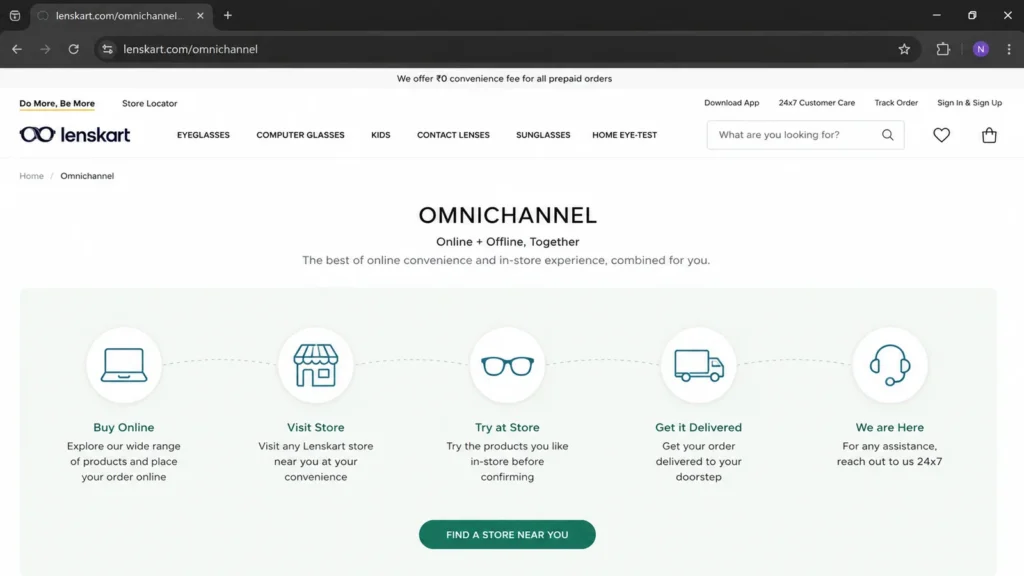
Lenskart doesn’t ask you to choose between shopping online or visiting a store — it blends both:
◉ You can browse and order from the website or app
◉ Or walk into one of its 1,500+ physical stores to try frames on
◉ Your prescription, cart, and preferences stay connected across both
This matters a lot for eyewear specifically, because glasses are a “feel it before you buy it” product — people want to physically try frames on, but also want the convenience of ordering online. Lenskart built a business that captures both kinds of customers.
3. Technology as a Differentiator
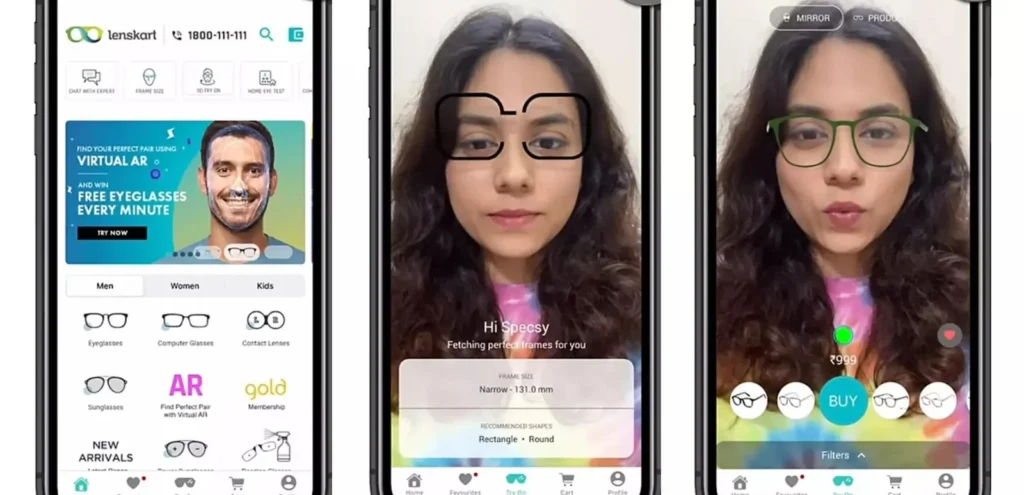
Lenskart uses tech to solve the biggest problem with buying glasses online — not being able to try them on:
◉ 3D try-on tools let you virtually see how frames look on your face
◉ Home eye check-up services send an optometrist to your house
◉ Prescription upload & digital lens fitting make ordering online almost as reliable as an in-store visit
This technology isn’t just a nice feature — it’s core to why customers trust buying eyewear from Lenskart instead of a physical-only optician.
4. Multiple Revenue Streams
Lenskart doesn’t rely on just one type of sale. It earns from:
◉ Prescription eyeglasses (its biggest category)
◉ Sunglasses
◉ Contact lenses (through its brand Aqualens)
◉ Eye accessories
◉ Eye check-up and testing services.
5. Franchise + Owned Store Expansion
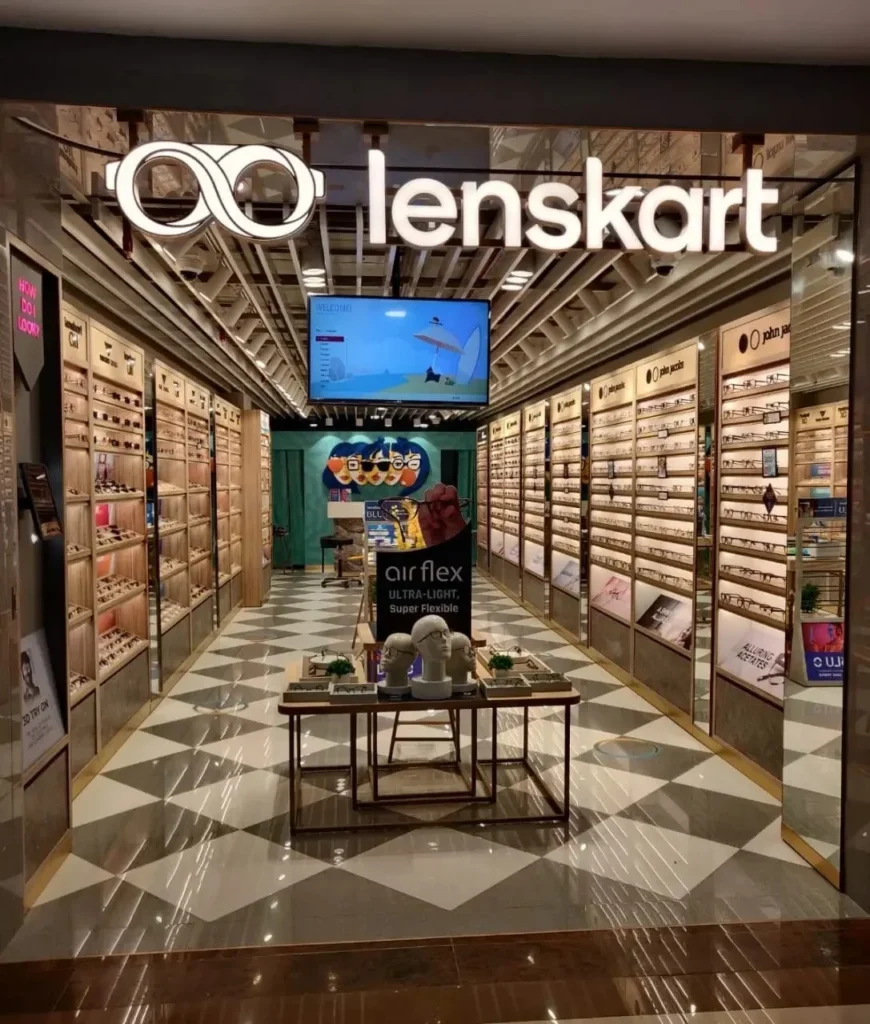
To grow its offline presence quickly without spending too much of its own capital, Lenskart expanded partly through franchise store models alongside company-owned stores — helping it scale to 1,500+ stores across India, Singapore, and Dubai relatively fast.
6. Global Growth Through Acquisitions
Rather than only building international presence from scratch, Lenskart expanded abroad by acquiring existing eyewear brands — most notably Owndays, a popular Japanese eyewear chain. This gave it instant access to markets in Southeast Asia and Japan.
7. Subscription & Value Bundling
Lenskart also uses pricing strategies like “Buy 1 Get 1” offers and lens+frame bundles, making the per-unit cost of glasses feel more affordable — a pricing psychology that helped it grow rapidly among price-sensitive Indian customers.
Target Audience
1. Price-Conscious, Fashion-Aware Young Adults
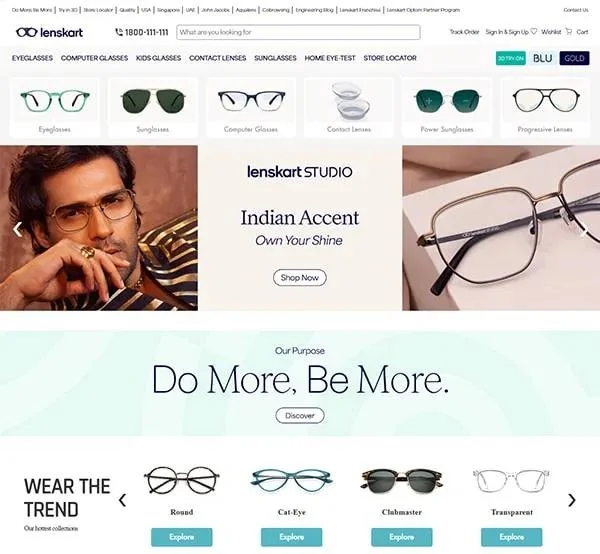
Lenskart’s core audience is India’s growing urban youth and young professionals — people who need glasses but don’t want to pay premium prices at traditional optical shops. They care about both affordability and style, wanting frames that look good, not just glasses that work.
2. Tech-Comfortable Online Shoppers
Since Lenskart started as an online-first company, its early and continuing audience is people comfortable buying things over the internet — used to browsing, comparing, and ordering from apps, similar to how they’d shop for clothes or electronics online.
3. First-Time Glasses Buyers
Many customers are people getting prescription glasses for the first time, often students or young working professionals, who don’t have a long-standing relationship with a traditional optician and are open to trying a new, modern brand.
4. Middle-Class, Value-Seeking Families
Beyond individuals, Lenskart also targets families looking for a reliable, affordable place to get eyewear for multiple family members — parents, kids, and grandparents — under one trusted brand.
5. People in Tier 2 & Tier 3 Cities
As Lenskart expanded offline, it deliberately targeted smaller Indian cities where quality optical stores were limited, bringing branded, trustworthy eyewear to places that previously only had local, unbranded shops.
6. Global Urban Customers (International Markets)
Through its expansion and acquisitions (like Owndays), Lenskart also targets urban consumers in Southeast Asia, Japan, and the Middle East — generally people with similar needs: convenient, stylish, and reasonably priced eyewear.
7. Contact Lens & Sunglasses Users
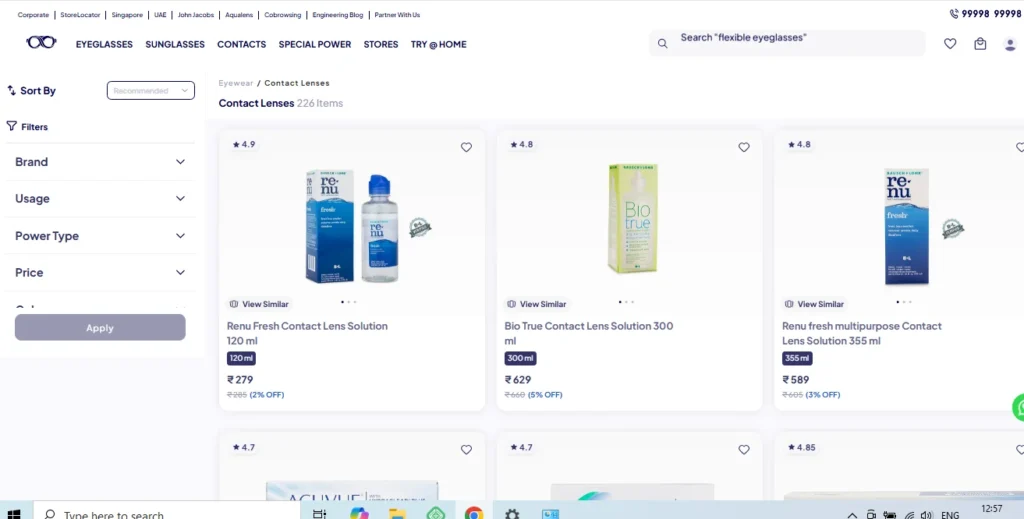
Beyond just prescription glasses, Lenskart also targets people specifically looking for sunglasses or contact lenses (via its Aqualens brand) as fashion or lifestyle purchases, not just vision correction needs.
Market & Industry Overview
If you look at where India’s eyewear industry stands today, it’s in the middle of a genuine transformation. For years, buying glasses in India meant walking into a small, local optical shop — unbranded, unpredictable pricing, and very little choice. That world is changing fast.
The market itself is large and still growing. India’s eyewear industry is worth somewhere around 11 billion dollars right now, and it’s expected to nearly double over the next several years. What’s driving that growth isn’t just population — it’s a mix of things: more people needing vision correction because of screen time and lifestyle changes, more people shopping online instead of walking into a shop, and a real shift toward premium products like better lens coatings and stylish frames.
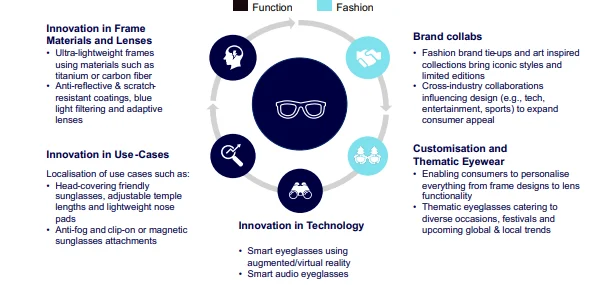
Prescription glasses still make up the biggest chunk of the market, because at the end of the day, most people buying eyewear genuinely need it for their eyes. But something interesting is happening on top of that — eyewear is slowly turning into a tech product too. You’re seeing things like audio glasses with built-in speakers, smart features, even AI integration in some premium products. So it’s no longer just “do you need glasses” — it’s becoming “what can your glasses do for you.”
Geographically, demand isn’t evenly spread. North India currently leads in terms of market share, which actually tells you there’s still a lot of untapped opportunity in other parts of the country — smaller cities, southern and eastern markets, places where organized eyewear brands haven’t fully arrived yet.
And if you zoom out to the global picture, the story gets even bigger. The global eyewear market is worth over 220 billion dollars, and Asia Pacific — the region India sits in — is growing faster than anywhere else in the world. So a company built in India, in this category, right now, is sitting in exactly the right place at the right time.
Marketing Challenges
Now, growing in this space isn’t easy — and there are some real challenges that come with it.
The first one is trust. Glasses are personal. They sit on your face, they affect how you look, and people are naturally hesitant to buy something so visual without trying it on first. Even with tools like virtual try-on, convincing someone to trust an online purchase for something this personal is an ongoing battle.
Second, there’s the competition problem — and it comes from two very different directions at once. On one side, there are modern, well-funded eyewear brands competing on the same digital turf. On the other side, there are still thousands of small, local opticians, especially in smaller towns, who compete purely on relationships and price. Marketing has to work against both of these completely different types of rivals.
Then there’s a tricky balancing act around pricing and positioning. The brand wants to be seen as affordable and accessible to everyday customers — but it also wants to sell premium, stylish, designer eyewear. Trying to say “we’re cheap” and “we’re premium” in the same breath is genuinely difficult to pull off without confusing people.
Fashion adds another layer of pressure. Eyewear trends move quickly now — what looked stylish a year ago can feel dated today. That means marketing teams constantly need fresh campaigns, new influencer partnerships, and new collections, which takes real time and money to sustain.
Scale brings its own challenges too. As the brand expands into smaller cities and international markets, it has to speak differently to different audiences — different languages, different price sensitivities, different cultural expectations around fashion and shopping. What works in a big city doesn’t automatically work in a smaller town or a different country.
So overall, the market opportunity is genuinely strong — but staying trusted, consistent, and relevant while growing this fast is the real challenge underneath the surface.
Lenskart’s Digital Marketing Strategy
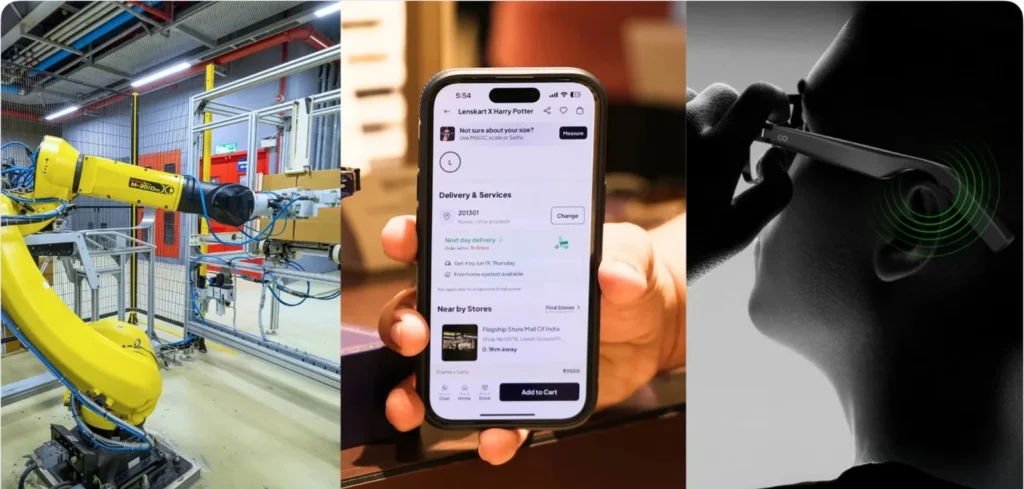
Lenskart was built as a digital-first company from day one, and that DNA still shows in how it markets itself today. Rather than treating digital marketing as one channel among many, it treats it as the engine of the whole business.
At the core, there’s a data-driven acquisition machine running across Google Search, Meta ads, and YouTube — constantly testing what works. The team uses search ads, shopping ads, and display banners aimed at both people ready to buy and people just browsing, with heavy A/B testing, device optimization, and location-based targeting. They’re not just showing random ads either — campaigns are built around behavioral segmentation using past browsing history and purchase intent, along with lookalike audiences modeled on their highest-value customers.
What’s genuinely interesting is how far they’ve pushed personalization with AI. By 2025, Lenskart was using generative AI to produce personalized video ads across thousands of different frame styles, which improved click-through rates and brought down the cost of acquiring each customer.
Loyalty and retention matter just as much as new customer acquisition. The Lenskart Gold loyalty program had grown to over 15 million active members by 2026, helping lock in repeat purchases while feeding customer data back into email and SMS remarketing.
And the results speak for themselves — the company grew from serving around 30 customers a day in its early years to about 3,000 customers a day, with revenue reaching close to $2.5 billion.
SEO Strategy
Lenskart’s SEO approach is less about chasing every keyword and more about owning its own name and category completely.
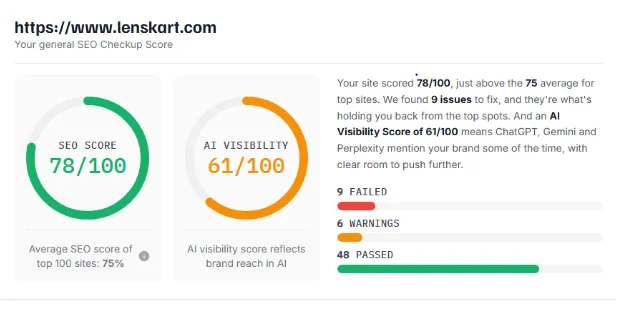
On brand search, they’ve essentially dominated — Lenskart ranks #1 in India for the keyword “Lenskart” itself, pulling in 331,000 visitors just from that search term. That might sound obvious, but owning your own brand name in search results isn’t automatic — it takes consistent content, backlinks, and technical SEO to actually hold that position against competitors trying to bid on your name.
Beyond brand search, their overall organic visibility has been climbing fast. The website pulled in 8.67 million visitors in June 2025 alone — a jump of 24,000 visitors from the month before — and their global ranking improved from 6,186 to 5,575 in just three months.
Part of what makes this work is tone. Lenskart’s content strikes a witty, style-conscious tone while still sounding authoritative on topics like eye health — so it connects with people casually browsing for fashion, while still being trusted for genuine vision-care information. That combination — SEO content that’s both entertaining and credible — is what lets them rank for both “stylish sunglasses” type searches and “eye test near me” type searches at the same time.
Social Media Marketing
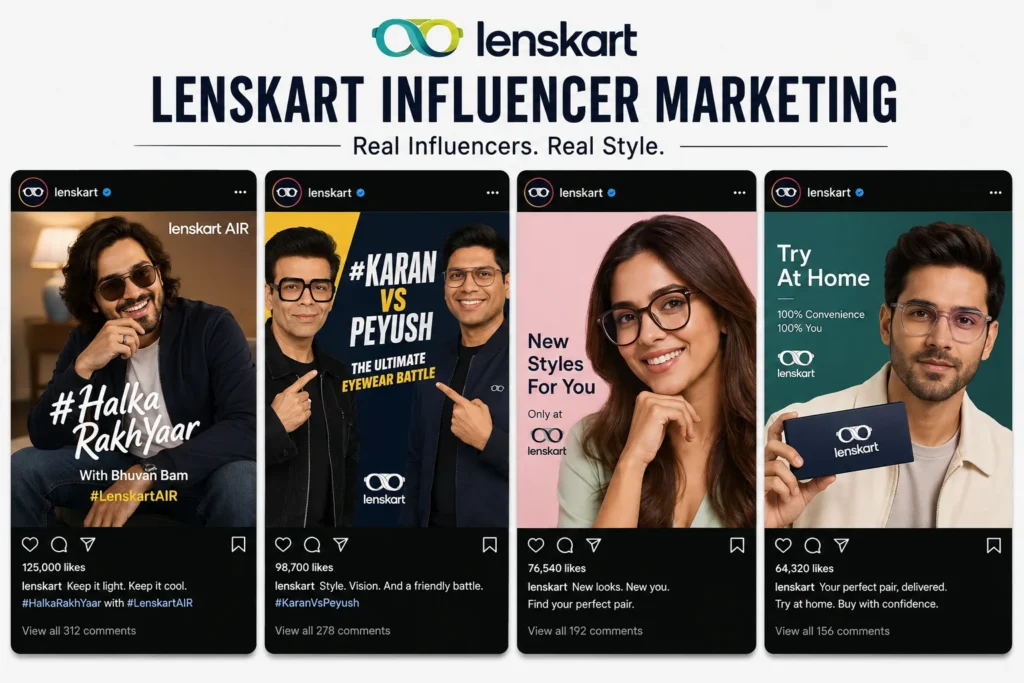
Lenskart treats social media less like an ad channel and more like a place to build a personality — think witty captions, trend-jacking, and constant lifestyle content — not just product photos.
Where they show up: Lenskart maintains a strong presence across Instagram, Facebook, and YouTube, blending product marketing with lifestyle content to turn eyewear into an aspirational, trendy purchase rather than a purely functional one.
A real example — the Karan Johar campaign:
One of their most talked-about campaigns paired Peyush Bansal (Lenskart’s own founder) against celebrity Karan Johar in a playful ad film. The short films had Karan Johar defending his taste for luxury, while Peyush promoted Lenskart’s trendy but affordable frames — and the campaign went viral, positioning Lenskart as the brand that makes fashionable eyewear accessible to everyone, while boosting sales through the value-for-money message. The lesson here is simple: pairing humor with a recognizable celebrity face, backed by a clear message, creates the kind of content people actually want to share — not just watch.
A socially conscious campaign: Lenskart didn’t only lean on humor — they also ran a campaign built around eye-health awareness. Through digital ads showing real-life situations where poor eyesight could lead to accidents, they spread the message that regular eye tests matter — building genuine credibility as a socially responsible brand while still reminding people of the core service they offer.
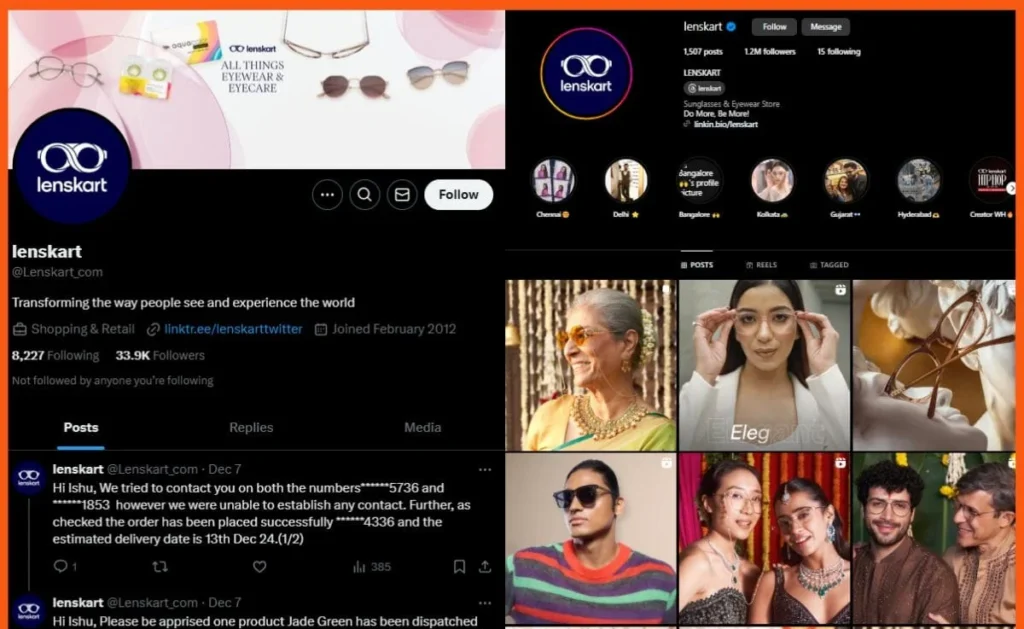
Influencers, but chosen carefully: Rather than only chasing big celebrities, Lenskart’s influencer programs lean heavily toward micro-influencers in fashion, lifestyle, and tech, since smaller creators tend to drive more authentic discovery and feel more aspirational to their followers.
Content Marketing

Content, for Lenskart, isn’t a side activity — it’s built right into how they educate, engage, and quietly sell to people at the same time.
➜ It runs across two main formats — blogs and video.
On the written side, they publish educational blog content around topics like eye health, digital eye strain, and eyewear styling — the kind of practical guides that help someone figure out which frame actually suits their face. This content isn’t really trying to “sell” in the moment — it’s trying to be genuinely useful, so when someone’s ready to buy, Lenskart is already the trusted source they’ve been reading.
On video, they go big. Video content makes up around 43% of everything they post on social media, which tells you how central it’s become to the strategy. And they don’t treat every platform the same way — YouTube is used for long-form, in-depth content like tutorials, expert interviews, and real customer stories, while Instagram Reels and TikTok get short, fun, fast-paced videos built around trends and influencer collaborations.
They also go a step further than just posting videos — they run live-stream events for new product launches and real-time customer Q&As, which creates a sense of urgency and excitement around the brand.
➜ Why blogs and videos work together:
The real strength isn’t either format alone — it’s how they connect. A blog post about “how to pick frames for your face shape” can point to a video tutorial doing the same thing visually, and vice versa. That combination keeps people engaged longer and builds trust from two different angles — read it, then watch it.
➜ Behind the scenes:
This isn’t random content thrown out daily — campaigns start with a clear briefing process where the team defines objectives, target audience, and what they’re trying to achieve, drawing inspiration from trends, competitors, and direct customer feedback. It’s a genuinely structured process, not just “let’s post something today.”
Influencer Marketing
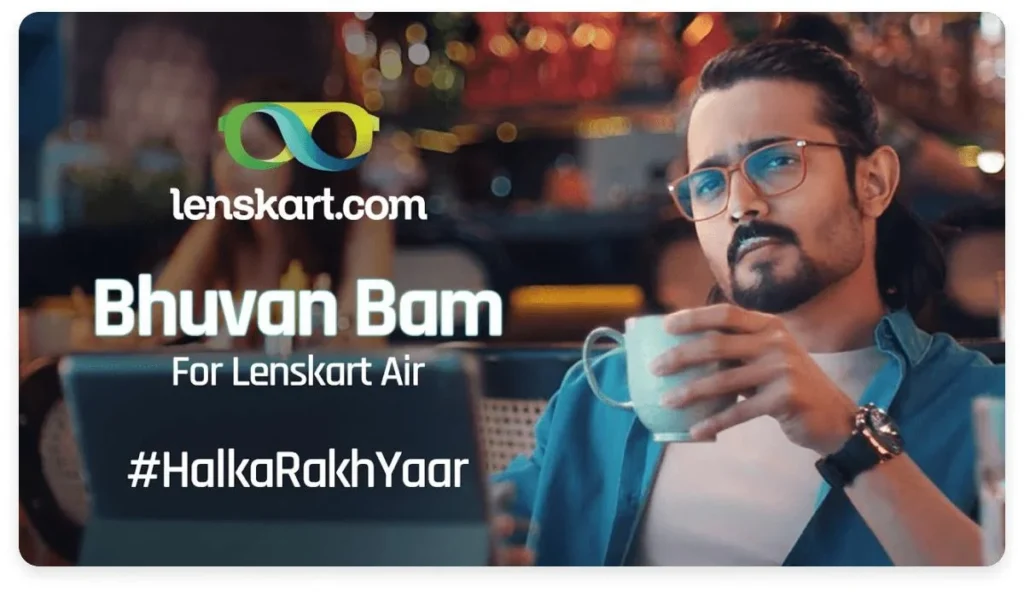
Lenskart’s influencer approach works on two levels at once — big celebrity faces for reach, and smaller creators for authenticity.
➜ The celebrity layer: Lenskart has worked with well-known names like Katrina Kaif, Karan Johar, and Kiran Advani, and these celebrity campaigns generate millions of impressions, helping the brand reach new audiences quickly. Katrina Kaif, in particular, became closely associated with the brand as an ambassador, lending it fashion credibility.
A real example — the #KaranVsPeyush campaign:
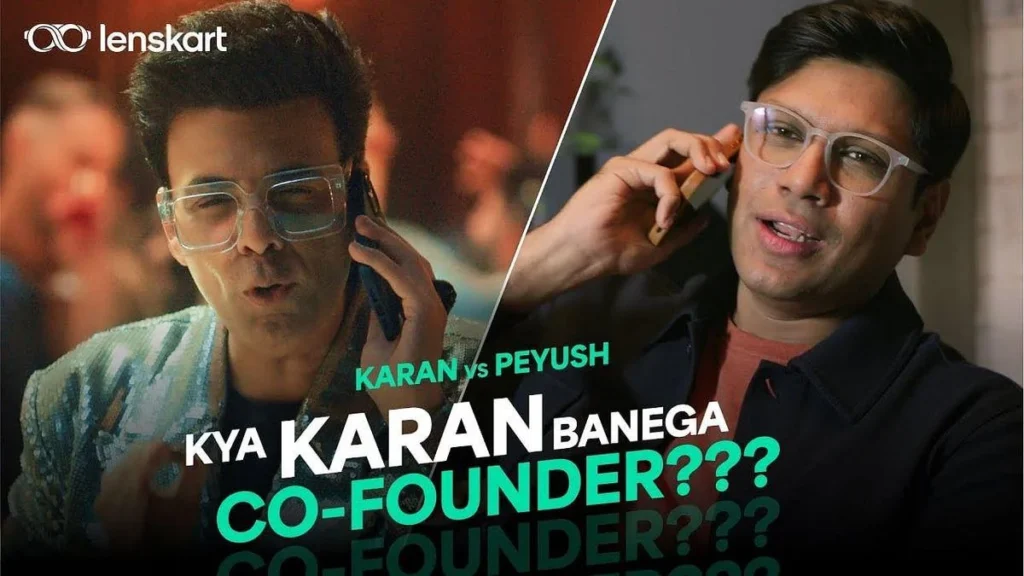
One standout example paired Lenskart’s own founder, Peyush Bansal, directly against Karan Johar in a lighthearted back-and-forth ad series. The campaign, called #KaranVsPeyush, mixed humor with product education, engaging audiences while getting them to interact with the content. The idea worked because it didn’t feel like a typical ad — it felt like a fun rivalry people wanted to watch and share, while quietly reinforcing the message that Lenskart is stylish and affordable.
➜ The micro-influencer layer: Alongside big celebrities, Lenskart deliberately works with smaller creators too. While celebrity endorsements help elevate visibility, partnering with micro-influencers brings a more personal touch, making the brand feel relatable to specific niche audiences — think a fashion-focused Instagram creator with 50,000 engaged followers, rather than someone with millions of largely passive ones. Lenskart has even leaned on this by choosing a YouTuber as a brand ambassador, reflecting a fully thought-through influencer strategy rather than just chasing the biggest names.
➜ Why the mix matters: Big celebrities give Lenskart scale — instant recognition and mass reach. Micro-influencers give it believability — the feeling that a “regular person like me” actually likes and trusts this brand. Together, they cover both ends: broad awareness at the top, and genuine trust-building at the ground level, which is exactly what a brand needs when it’s asking people to buy something as personal as eyewear based on a video or a photo.
Paid Advertising & Campaigns
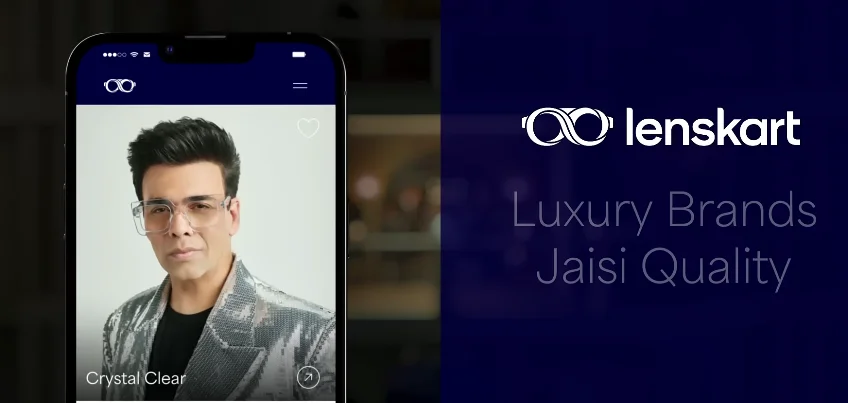
Youtube Link :- https://youtu.be/qRuf3OQ4B4U
Lenskart’s paid advertising isn’t about throwing money at ads and hoping something sticks — it’s a tightly measured system built around one goal: getting the right person to buy, at the lowest possible cost.
At the core, they run search ads, shopping ads, and display banners aimed at both high-intent shoppers ready to buy and casual browsers just exploring options, with heavy A/B testing, device optimization, and geographic targeting layered on top. Nothing runs blind — campaigns are built using behavioral segmentation based on past browsing and purchase intent, along with lookalike audiences modeled on their best existing customers.
And it’s not just performance ads. Big campaigns — like the humorous #KaranVsPeyush series pairing founder Peyush Bansal against Karan Johar — blend brand storytelling with paid promotion, so the same campaign builds both immediate clicks and longer-term brand recall.
Retention plays a role in the paid strategy too, not just new customer acquisition. The Lenskart Gold loyalty program, with over 15 million active members by 2026, feeds first-party data back into email and SMS remarketing, which means past customers keep getting brought back through paid-style retargeting, cheaper than acquiring someone brand new.
Website & E-commerce Strategy
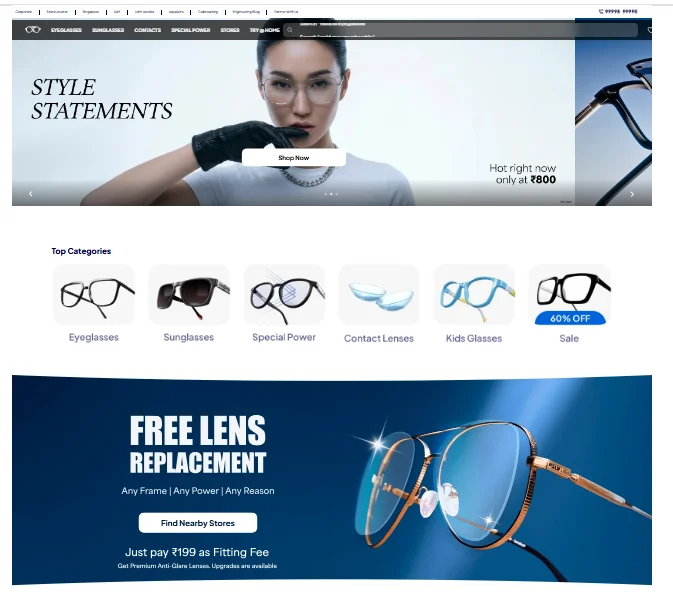
Lenskart’s website and app aren’t just a place to browse and check out — they’re designed to solve the one thing that used to stop people from buying glasses online: not being able to try them on.
The whole experience is built around removing friction, step by step. Peyush Bansal’s core strategy has always centered on eliminating “fit anxiety” and “style uncertainty,” which were the biggest reasons people avoided buying glasses online in the first place. he try-on experience is the centerpiece. <cite name=”33-1″>Users can take a selfie through their webcam or phone, and Lenskart’s AI runs face analysis to suggest frames that actually suit that person’s facial features,</cite> then let them try on multiple pairs in real time with a 360-degree view and zoom-in feature. It’s genuinely deep tech under the hood — the tool uses deep learning to map thousands of data points on a user’s face, creating a realistic 3D avatar that shows exactly how a frame sits on the nose and how wide it looks against the temples.
★ It’s not just a gimmick — it moves the needle on actual sales. Overall online conversions across the app and mobile site rose by 17%, driven specifically by users engaging with the AR try-on feature.
★ The app is treated as the connective bridge between online and offline, not a separate channel. Customers can book a home eye test directly through the app, shortlist frames online, and then complete the experience in-store — so the website/app doesn’t compete with physical stores, it feeds into them.
★ And the scale is real. With an intuitive UI/UX built on an advanced online platform, Lenskart now processes around 80,000 orders per day, which required serious backend investment — including a PCI DSS-compliant secure payment gateway, real-time order tracking, and a custom content management system that lets the team update banners, product listings, and pricing across the platform in just a few clicks, syncing seamlessly with physical stores.
Technology & Innovation
If there’s one thing that separates Lenskart from a typical eyewear retailer, it’s that they behave like a technology company that happens to sell glasses — not the other way around.
AI-powered virtual try-on is the flagship innovation. What started as a fairly basic feature has evolved significantly — it was initially powered by external DITTO technology and later evolved into Lenskart’s own proprietary AI-driven capability, and today the system scans and analyzes a user’s face, detects face shape and temple size, and suggests suitable frames automatically. Lenskart even calls this their defensible “technology moat” — something competitors can’t easily copy because it took years of AI investment to build.
Manufacturing is just as tech-driven as the app. Lenskart’s factories use robotics, precision cutting machines, and automated assembly lines to produce lenses and frames at speed, which is a big part of how customers in many cities now receive prescription glasses in just 24-48 hours, compared to the traditional 7-10 day wait.
In physical stores, the tech continues. As they expanded internationally, Lenskart’s flagship stores began featuring AI-powered 3D Try-On machines integrated with virtual face-mapping that suggests frames right on the shop floor, plus creative touches like a dedicated “Sun Room” trial space designed to replicate outdoor lighting for trying on sunglasses. They’ve even partnered with outside tech — working with Tango Eye, an AI video analytics company, to track and analyze customer footfall across their many physical stores.
And customers are actually using it, at scale. One out of every four users on the Lenskart app has engaged with the augmented reality try-on feature, and AR usage grew three-fold in just a two-week period after an upgrade — with the app now surpassing 20 million downloads.
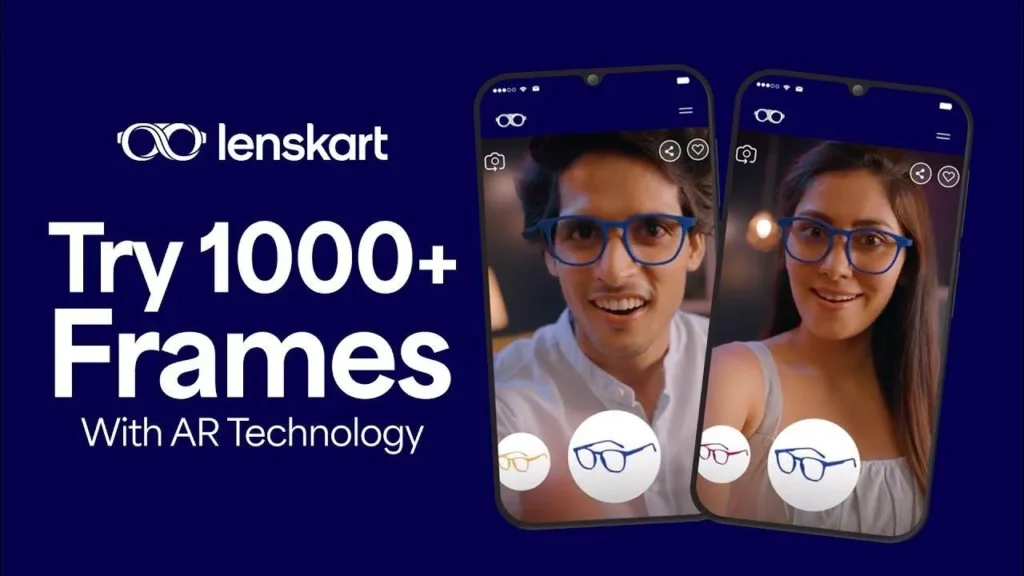
The underlying philosophy, in Peyush Bansal’s own words as CEO, sums it up well — technology and AI are treated as the biggest enablers of everything the company does, with continued investment aimed at pushing customer experience further while building the supply chain needed to deliver quality eyewear at scale.
Offline + Online (Omnichannel) Strategy
Lenskart didn’t set out to build both an online and offline business at the same time — it actually started online-only, learned the hard way why that alone wasn’t enough, and then built offline to fix what online couldn’t solve.
It started as a pure e-commerce play. Lenskart launched in 2010 as an online contact lens store, and by 2011 had added glasses and sunglasses — even briefly trying other verticals like Watchkart, Bagskart, and Jewelskart before shutting all of them down by 2014 to focus purely on eyewear.
But pure online hit a wall pretty quickly. Bansal realized that unlike books or electronics, where specifications are straightforward, glasses are deeply personal — you genuinely need to see how they look on your own face. Every objection pointed to the same conclusion: eyewear is fundamentally a physical-first category, and rather than fighting that reality, Lenskart decided to build around it.
So they tried a clever middle step first — sending glasses home to try. Around 2011-2012, Lenskart introduced a “home trial” service, letting customers pick frames online and receive multiple pairs at home to try before buying — a clever bridge, but still not the full answer.
Then came real physical stores. The first physical stores opened in 2015, alongside the launch of home eye tests, followed by years of aggressive store expansion between 2017 and 2019, backed by SoftBank’s investment.
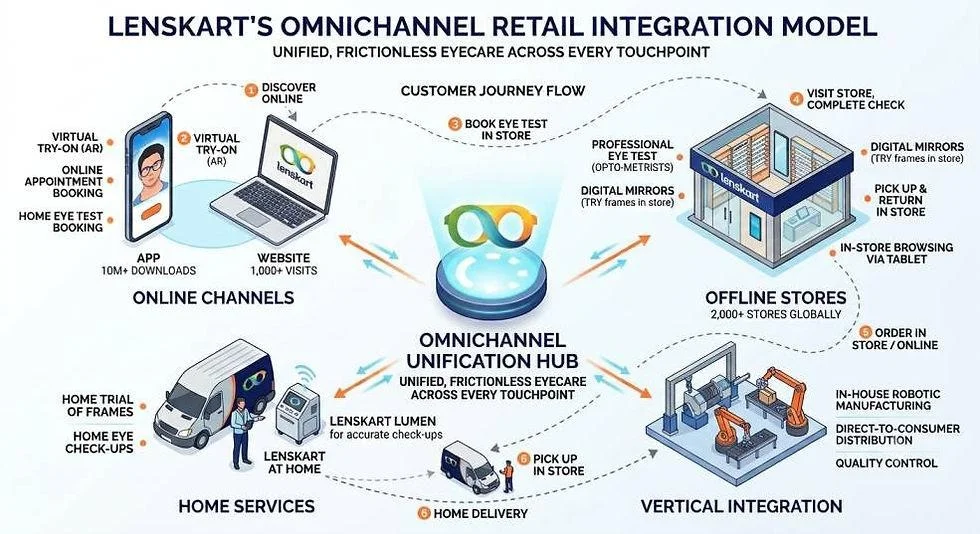
From there, the two channels became genuinely connected, not just parallel. Lenskart calls this approach “phygital” — a deliberate commitment to omnichannel retail because eyewear products require physical interaction; people generally only spend money once they’ve actually tried something on their face and gotten professional assurance.
What connects everything is data and a shared customer profile. Online and offline customer data is integrated into unified profiles, letting Lenskart track behavior across both channels and personalize engagement — essentially giving customers the convenience of digital shopping while keeping the personalized feel of an in-store visit. A neat example of this is what’s called the “endless aisle” — a strategy where a customer’s online cart and browsing history connect seamlessly with what’s available or being tried in a physical store, so switching between channels never feels disconnected.
And the scale today reflects how well this worked. Lenskart now operates more than 2,700 stores globally, serves over 30 million customers, and generated ₹6,652 crore in revenue in FY25, having turned genuinely profitable with ₹297 crore in net profit before filing for its IPO.
Major Marketing Campaigns
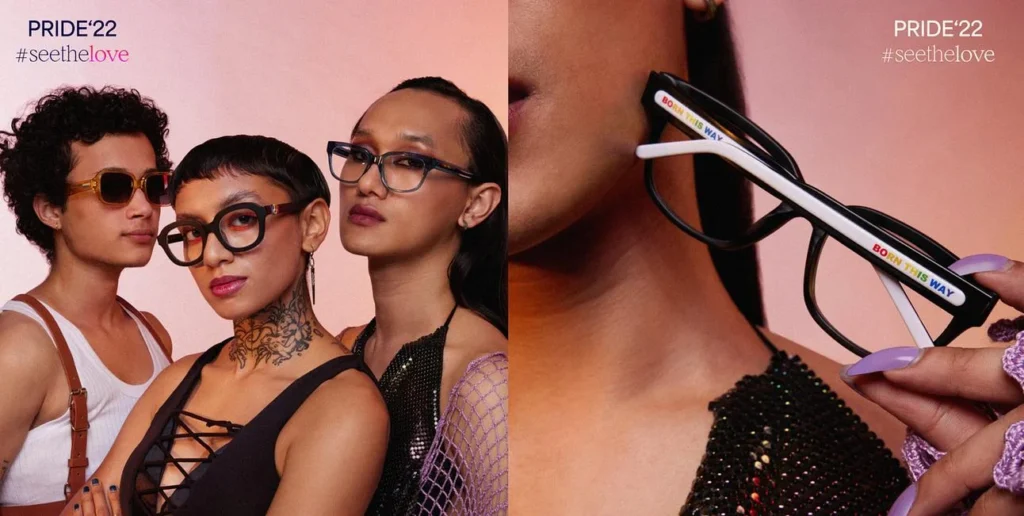
Lenskart’s biggest campaigns tend to follow a pattern — mix humor or emotion with a clear, simple message, and let the brand’s founder or a familiar celebrity face carry it.
#KaranVsPeyush — humor meets brand positioning
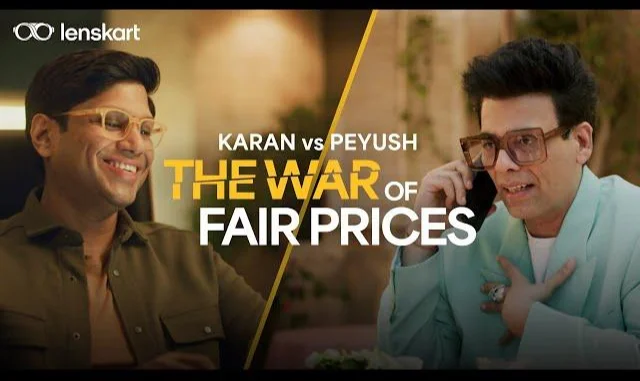
This is probably their most talked-about campaign. It paired founder Peyush Bansal directly against celebrity Karan Johar in a playful back-and-forth, blending humor with product education, and engaging audiences enough that it went viral. The bigger idea behind it was positioning Lenskart as the brand that makes fashionable eyewear accessible to everyone — mixing celebrity charm with a clear value-for-money message, rather than relying on celebrity glamour alone.
Nazar Ghati Durghatna Ghati — safety meets brand awareness
This campaign took a very different tone — built around road safety and eye health rather than fashion. It highlighted how poor eyesight can contribute to accidents, encouraging people to get regular eye check-ups, while naturally tying that message back to Lenskart’s services. It later got a “2.0” version that showcased the brand’s new Augmented Reality try-on feature, which saw a strong response — with usage of the AR feature tripling within just two weeks of launch. It’s a good example of Lenskart blending social responsibility with brand promotion — genuinely useful public messaging that also builds trust in the brand.
“Glasses Badlo, Vibe Badlo” and “Dhaakad Hai” — style and personality-driven campaigns
More recent campaigns from Lenskart’s in-house social media team have leaned into playful, trend-driven storytelling — campaigns like “Dhaakad Hai” and “Glasses Badlo Vibe Badlo” were built through a structured process of research, brainstorming, and clear briefing on goals and target audience, reflecting how even fun, trendy-feeling campaigns are backed by real strategic planning, not random creative bursts.
Celebrity-led fashion positioning
Beyond one-off campaigns, Lenskart has consistently used celebrity collaborations with names like Katrina Kaif, Karan Johar, and Kiran Advani, paired with emotional storytelling to connect with niche audiences — reinforcing the idea that Lenskart isn’t just an eyewear retailer, but a lifestyle and fashion brand people want to associate with.
Why these campaigns work together
Each major campaign tends to serve a different purpose — #KaranVsPeyush built viral buzz and value positioning, Nazar Ghati Durghatna Ghati built trust and social credibility, and the “Vibe” style campaigns keep the brand feeling current and fashionable. Together, they cover the full range of what a brand needs: to be liked, trusted, and seen as relevant — all at once.
Competitor Analysis
| Brand | Positioning |
| Lenskart | Technology + Scale + Omnichannel Leader |
| Titan Eye+ | Brand Trust + Premium Retail |
| Specsmakers | Value + Affordable Eyewear |
| GKB Opticals | Optical Expertise + Premium Positioning |
Lenskart doesn’t compete against just one type of rival — it’s fighting a battle on multiple fronts at once: organized offline chains, digital-first startups, and even large marketplaces.
The biggest rival — Titan Eye+
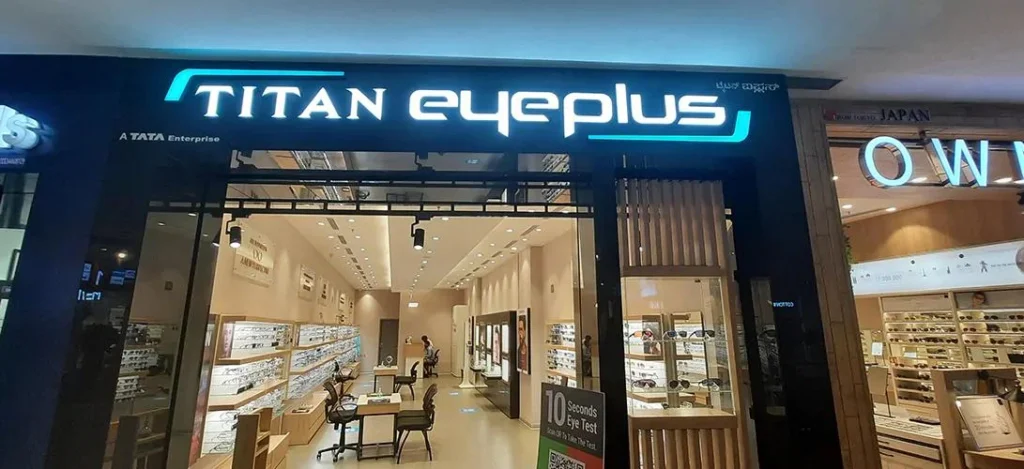
Titan Eye+ is widely considered Lenskart’s biggest competitor in India. It’s a very different kind of threat though — Titan Eye+ carries decades of brand equity and consumer trust inherited from the larger Titan Group, which also owns major watch and jewelry brands. It operates more than 900 stores across 350+ cities, backed by the Tata Group, and is known for its detailed 20-step eye test program along with a strong mix of homegrown and international brands. Essentially, where Lenskart wins on price, tech, and convenience, Titan Eye+ wins on trust and clinical credibility — Titan generally costs more because it focuses on premium lenses, detailed eye exams, and a retail-first experience, while Lenskart keeps prices lower through online sales, in-house manufacturing, and frequent promotions.
Regional and value-focused players
Specsmakers is especially strong in South India, offering a solid middle ground of affordability and reliable offline service, while brands like Coolwinks and Fastrack target younger, fashion-focused customers with trendy products at low prices.
Niche and premium competitors
On the higher end, GKB Opticals is a premium legacy chain (operating since 1959) that focuses heavily on luxury international brands and complex progressive lenses. For contact lenses specifically, LensBazaar stands out with a wider variety of lenses online than Lenskart currently offers.
Marketplace and global competition
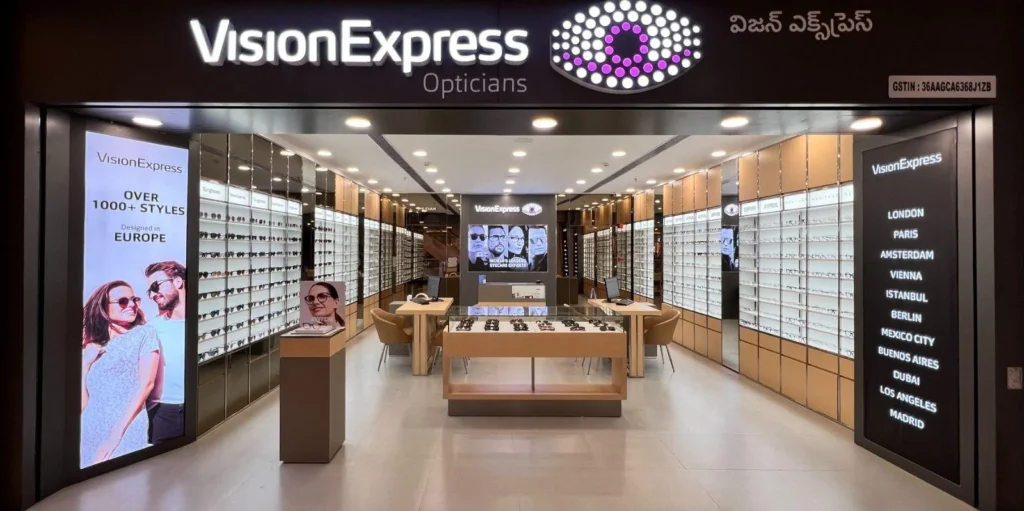
Beyond dedicated eyewear brands, general marketplaces like Amazon, Flipkart, and Snapdeal also sell eyewear and directly compete for the same customers, and internationally, Lenskart also competes with global players like Vision Express, Warby Parker, and the Italian eyewear giant Luxottica Group.
How Lenskart tends to win despite the crowd
Even with all this competition, Lenskart’s core edge remains its combination of scale, technology, and price — it built its position through a hybrid “clicks-and-bricks” model, pairing an immersive digital experience with a wide network of physical stores, something most single-channel competitors haven’t matched as completely.
| Comparison Factor | Lenskart | Titan Eye+ | Specsmakers | GKB Opticals |
| Business Model | D2C + Omnichannel | Retail + Omnichannel | Retail + Omnichannel | Retail + Omnichannel |
| Product Range | Eyeglasses, Sunglasses, Contact Lenses | Eyeglasses, Sunglasses, Contact Lenses | Eyeglasses, Sunglasses, Contact Lenses | Eyeglasses, Sunglasses, Contact Lenses |
| Pricing | Affordable → Premium | Mid → Premium | Affordable → Mid | Mid → Premium |
| Store Network | Large & Rapidly Expanding | Large | Growing | Selective |
| Online Presence | Very Strong | Strong | Moderate | Moderate |
| Technology | AI, AR Try-On, Digital Eye Test | Digital Eye Test, Online Shopping | Online Shopping, Virtual Try-On | Online Shopping |
| Manufacturing | Vertically Integrated | Retail-led | Retail-led | Retail-led |
| Omnichannel Experience | Excellent | Strong | Strong | Moderate |
| Loyalty Program | Lenskart Gold | Titan Encircle | Membership & Offers | Offers |
| Brand Positioning | Affordable + Fashion + Technology | Trust + Premium | Affordable + Fashion | Premium + Optical Expertise |
| Target Audience | Young + Mass Market | Mass + Premium | Young + Value-Conscious | Premium + Family |
| Key Advantage | Technology + Scale + Vertical Integration | Tata Brand Trust | Value Pricing | Optical Expertise |
| Key Challenge | High Competition + CAC | Premium Pricing | Smaller Scale | Limited Digital Reach |
Results & Business Growth
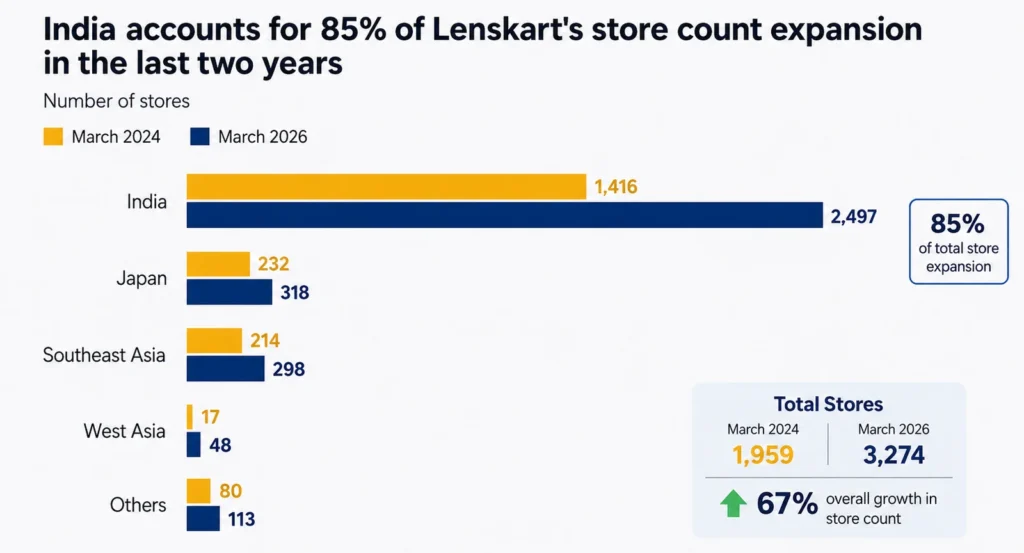
Numbers tell the Lenskart story better than almost anything else — this is a company that went from a small online experiment to one of India’s most closely watched IPOs in just over a decade.
➜ Steady, then explosive growth
Lenskart’s revenue grew from about ₹967 crore in FY2020 to over ₹5,427 crore in FY2024 — and the middle years were genuinely dramatic. FY2023 was a breakout year, with revenue more than doubling to ₹3,788 crore, roughly a 150% jump year-on-year, followed by another strong 43% growth to ₹5,427.7 crore in FY2026.
➜ Turning the corner into profitability
For a long time, Lenskart was a classic “growth over profit” startup story — but that shifted. The company reduced its losses by 84%, from ₹63 crore in FY23 down to just ₹10 crore in FY24, and then fully turned around in FY26, moving from a net loss of ₹10.1 crore to a net profit of ₹297.3 crore — a jump of nearly 3,028% in profitability. Its EBITDA margin also strengthened meaningfully over this period, rising from 6.9% to 14.7% between FY24 and FY26.
➜ Going public
All this growth built toward a major milestone — Lenskart’s IPO was a ₹7,278 crore offering, priced between ₹382-402 per share, making it one of the largest IPOs of the year, with the fresh issue portion of ₹2,150 crore earmarked for business expansion, technology infrastructure, and marketing. Demand was strong — the anchor investor portion was subscribed 15 times over, with grey market premium staying above 20% through the offer period.
➜ Life after listing
Since going public, growth has continued. In FY26, Lenskart reported total income of ₹8,988.34 crore, a 28.23% increase from ₹7,009.28 crore the previous year, alongside a notable reduction in company debt.
Scale today
Lenskart now operates 2,723 stores globally — 2,067 in India and 656 overseas — supported by centralized manufacturing in Bhiwadi and Gurugram, along with facilities in Singapore and the UAE, and the company has crossed over 100 million app downloads. It also backs up its scale with genuinely fast logistics — offering next-day delivery in 40 Indian cities and 3-day delivery in 69 others.
➜ The bigger market context
Part of why investors are optimistic long-term is the market itself — India’s eyewear market remains highly fragmented, with less than a quarter currently controlled by organized players like Lenskart and Titan Eye+, while the organized channel is projected to grow about 1.6 times faster than the unorganized market, reaching 31% share by FY30. In other words, the growth story so far may just be the first chapter — there’s still a lot of unorganized market left for Lenskart to convert.
Key Success Factors
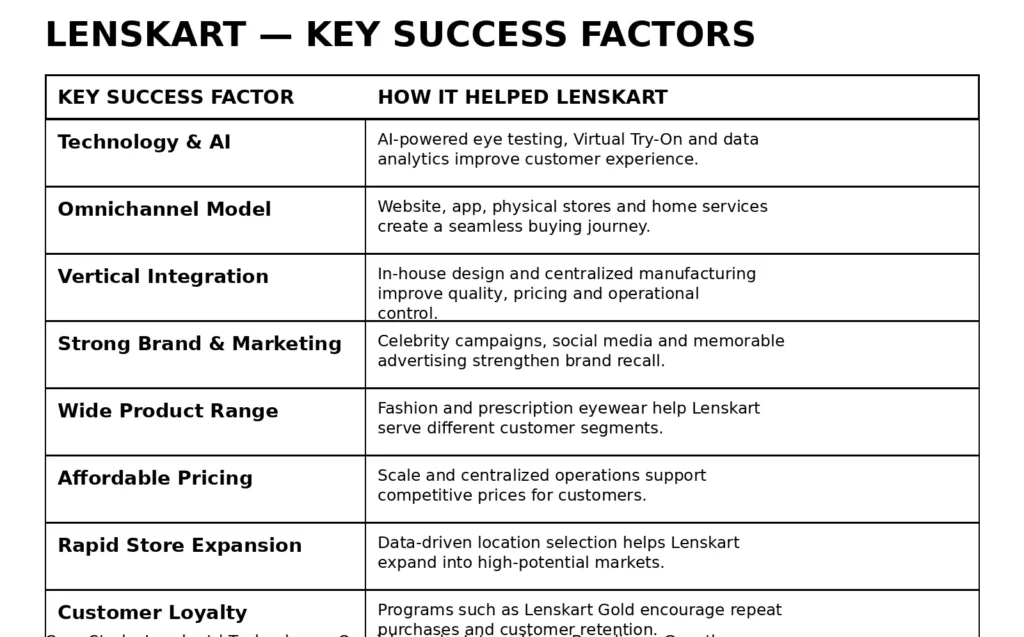
If you had to boil down why Lenskart worked when so many similar ideas didn’t, it really comes down to a handful of things done consistently well, over more than a decade.
➜ Solving the “trust” problem, not just the “price” problem. Plenty of companies could have sold cheaper glasses online — the real breakthrough was solving the emotional barrier: people not trusting how something would look on their own face. By FY25, Lenskart had conducted 38.6 million virtual try-ons and 37.9 million face/size measurements in India alone — that’s the scale of trust-building tech they’ve built, not just a nice feature on the side.
➜ Being genuinely digital-first, not digital-added-on. Lenskart’s mobile apps have crossed 100 million downloads globally, and nearly 45% of its India revenue now comes through digital touchpoints, which shows the online experience isn’t a side channel — it’s a core part of how the business actually runs.
➜ Owning the whole chain, from factory to face. By manufacturing its own frames and lenses instead of relying on external suppliers, Lenskart kept control over quality, cost, and speed — letting it offer both affordability and fast delivery, something harder to pull off if you’re just reselling other brands’ products.
➜ Building genuine brand affinity, not just brand awareness. Through consistent, personality-driven marketing — humor, celebrity partnerships, social responsibility campaigns — Lenskart built a brand people actually feel something about, not just recognize.
Challenges & Future Opportunities
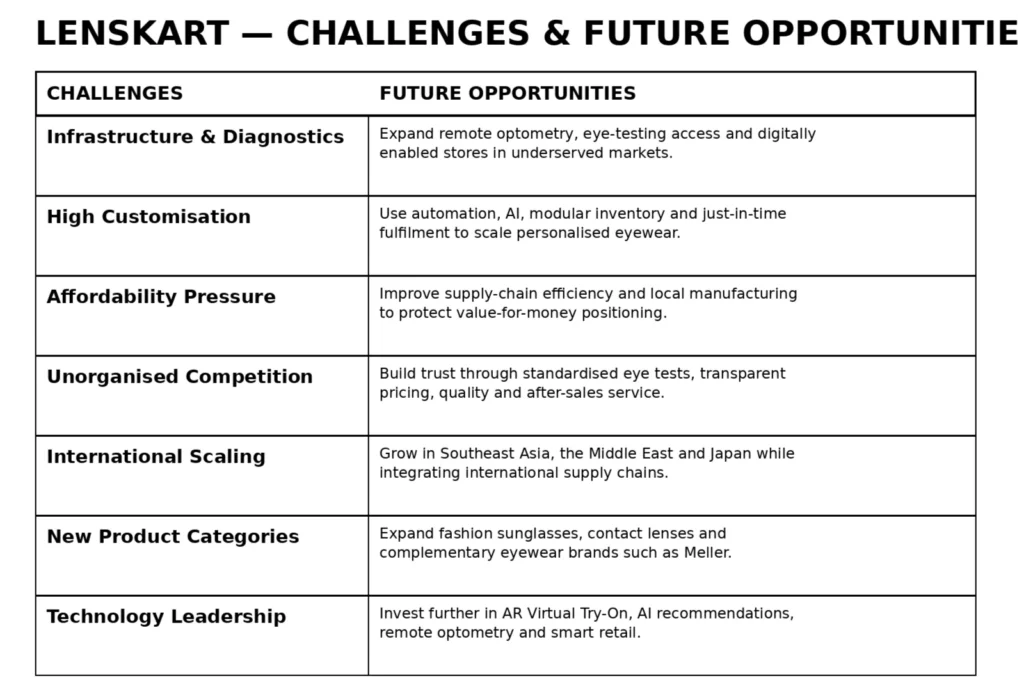
The unorganized market cuts both ways. Roughly 77% of India’s eyewear market is still unorganized, run by small, local sellers, which is both Lenskart’s biggest opportunity and its hardest challenge — that’s a massive pool of potential customers, but converting people used to a familiar local optician into loyal Lenskart customers takes real time and cost.
Managing complexity as the business gets bigger. Lenskart now coordinates manufacturing, procurement, inventory, retail stores, franchise partners, e-commerce, eye care services, and international subsidiaries all at once — which makes it a genuinely more complex business to run than a company operating through just one channel. Scaling that complexity smoothly, without cracks showing in customer experience, is an ongoing operational challenge.
Supply chain and geopolitical exposure. A large part of Lenskart’s raw material sourcing still comes from China, creating risk if there are global supply chain disruptions or geopolitical tensions. On top of that, international expansion brings exposure to foreign exchange fluctuations and differing regulatory environments across the markets it operates in.
Valuation pressure post-IPO. Since going public, Lenskart has faced scrutiny over its high market valuation, especially compared to more established, steadily profitable competitors like Titan Eye+, which puts pressure on the company to keep proving strong execution quarter after quarter to justify investor confidence.
Where the real opportunity lies ahead:
◉ Smart eyewear and AI: Lenskart has already launched “B by Lenskart,” its own AI-powered smart glasses running on Qualcomm’s Snapdragon AR1 chip with Google Gemini AI built in, and CEO Peyush Bansal has described the company’s shift from being a “consumer-tech” business toward becoming a genuine “consumer-AI” company.
◉ Tele-optometry and healthcare-adjacent services: Future potential includes areas like tele-optometry and insurance-paired vision plans, extending Lenskart beyond just selling products into ongoing vision-care services.
◉ Deeper Tier 2/3 penetration: The company’s future direction emphasizes expanding retail presence into all city tiers in India, continuing to bring organized, trustworthy eyewear to smaller towns.
◉ A genuinely large market runway: India’s overall eyewear market is forecast to nearly double, reaching ₹1,48,300 crore by 2030, giving Lenskart a long growth runway if it can keep converting unorganized-market customers.
Key Learnings
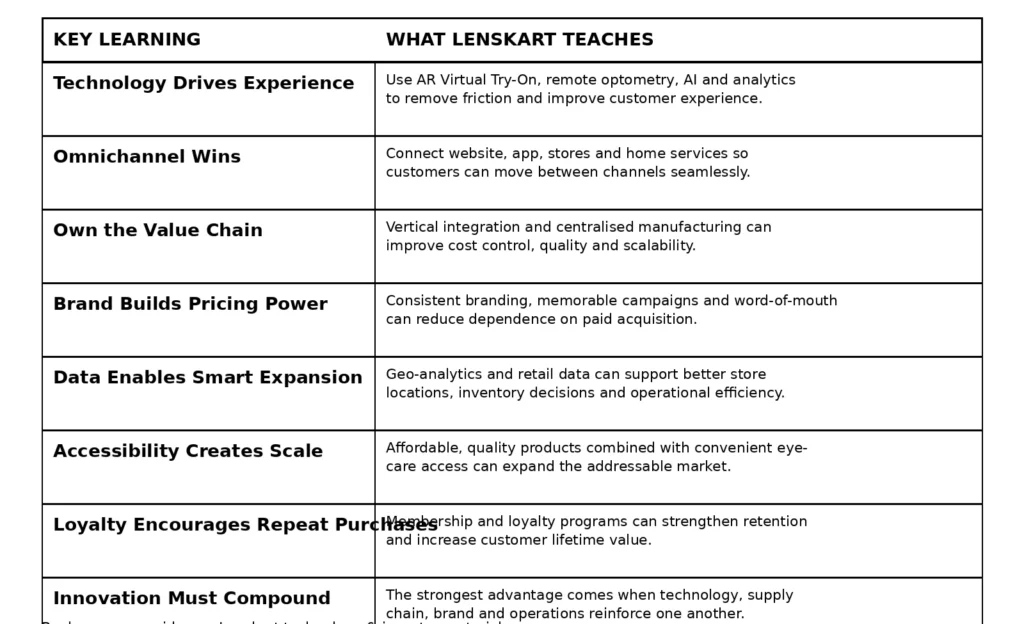
Solve the real objection, not the obvious one. The lesson that stands out most from Lenskart’s story is that the barrier to buying glasses online was never really about price — it was about confidence and trust. Every major innovation, from home trials to AI try-on, existed to solve that one specific fear, not a generic “make shopping easier” goal.
Sometimes the right answer isn’t “either/or.” Many startups feel pressure to pick a lane — online-only or offline-only, mass-market or premium. Lenskart’s growth suggests that refusing to choose, and instead building both sides well and connecting them, can be a genuine competitive advantage rather than a distraction.
Growth and profitability don’t have to be permanently at odds — but the shift takes discipline. For years, Lenskart prioritized scale over profit, which is common for startups. But the shift toward actual profitability — moving from a loss of ₹64 crore in FY23 to a profit of ₹297 crore in FY25 — shows that a company can eventually shift gears from “growth at any cost” to sustainable operations, without necessarily losing momentum.
Public market scrutiny is a different game than private growth. Going public exposed Lenskart to a new kind of pressure — investors closely questioning its premium valuation relative to more established peers, a reminder that strong growth numbers alone aren’t always enough once a company is judged quarter-by-quarter by public markets.
Focus compounds. The decision to abandon side ventures early and commit fully to eyewear turned out to be one of the most consequential choices in the company’s history — a reminder that concentrated effort on a well-chosen problem tends to beat spreading resources across multiple bets.
Conclusion
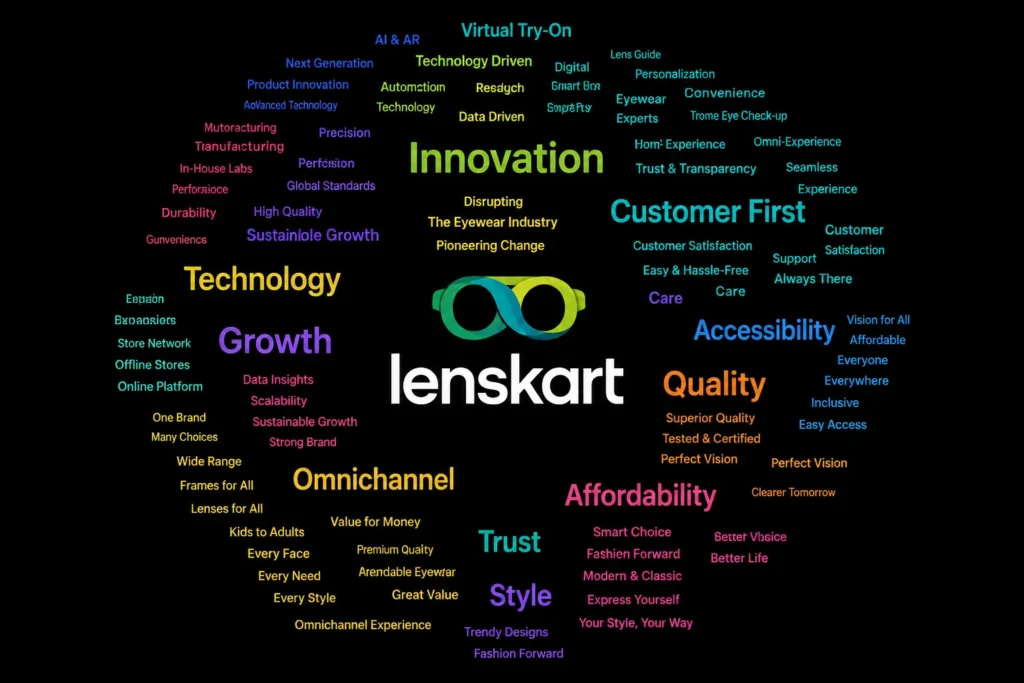
Lenskart’s story is really about spotting a simple, human problem — buying glasses in India was expensive, inconvenient, and stuck in the past — and solving it with patience, not shortcuts. What started as a small online experiment in 2008 grew into one of India’s most recognized consumer brands by doing a few things consistently well: building real trust through technology, refusing to choose between online and offline, and staying laser-focused on eyewear even when other ideas tempted the founders early on.
Today, Lenskart isn’t just selling glasses — it’s shaping how India buys them. With a strong market position, a public listing behind it, and genuine ambitions in AI-powered smart eyewear, the brand’s journey from a college classifieds website to a billion-dollar omnichannel giant is a solid example of how understanding people’s real hesitations — not just their needs — is often what builds a lasting brand.