In today’s competitive professional environment, academic knowledge alone is not always enough to prepare students for successful careers. Students also need practical exposure, industry interaction, communication skills, digital knowledge, and a clear understanding of professional expectations. This is why collaboration between educational institutions and industry-focused training organizations has become increasingly valuable.
Sinfode training partner at Sobhasaria Engineering College is an initiative focused on creating meaningful opportunities for students to connect their academic learning with practical career requirements. Through student interaction, skill development, industry exposure, and career-focused guidance, the collaboration aims to encourage students to understand the changing demands of the professional world.
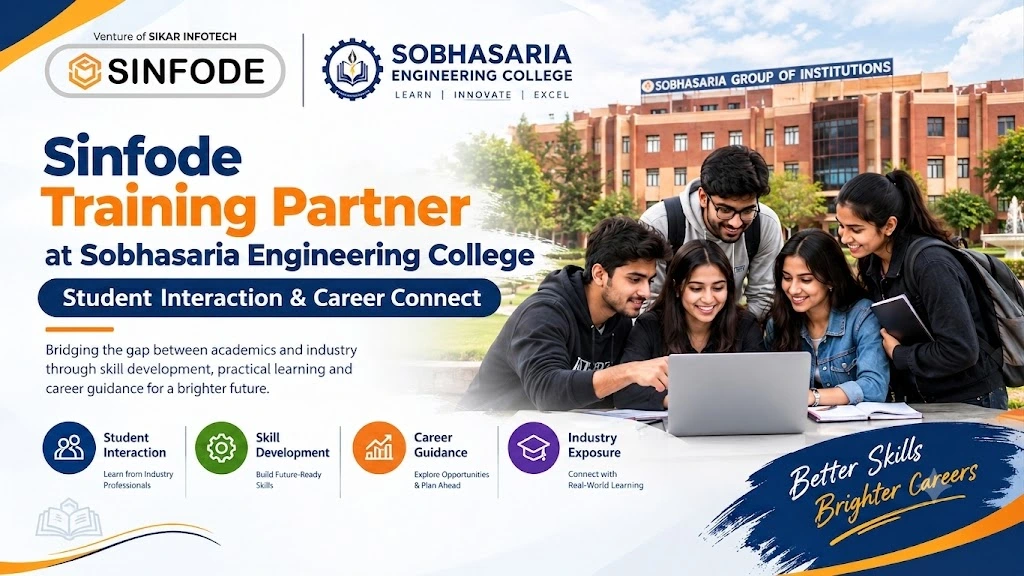
For engineering students, such exposure can be particularly valuable because the transition from college to a professional career requires more than a degree. Students need to understand how their knowledge can be applied, which skills employers value, and how they can prepare themselves for future opportunities.
Table of Contents
Sinfode Training Partner at Sobhasaria Engineering College
The association of Sinfode training partner at Sobhasaria Engineering College brings together academic learning and industry-oriented skill development.
Sinfode focuses on practical and career-oriented learning that can complement students’ academic education. Through interaction with students, trainers can help learners understand the importance of developing skills beyond their regular curriculum.
Engineering education provides a strong academic foundation, but students may also need exposure to:
- Industry expectations
- Professional communication
- Digital skills
- Career planning
- Interview preparation
- Internship opportunities
- Practical learning
- Workplace skills
- Personal branding
- Professional development
The role of a Sinfode training partner is therefore not limited to delivering training. It can also involve creating awareness among students about the importance of continuous learning and career preparation.
Student Interaction: Connecting Education with Industry
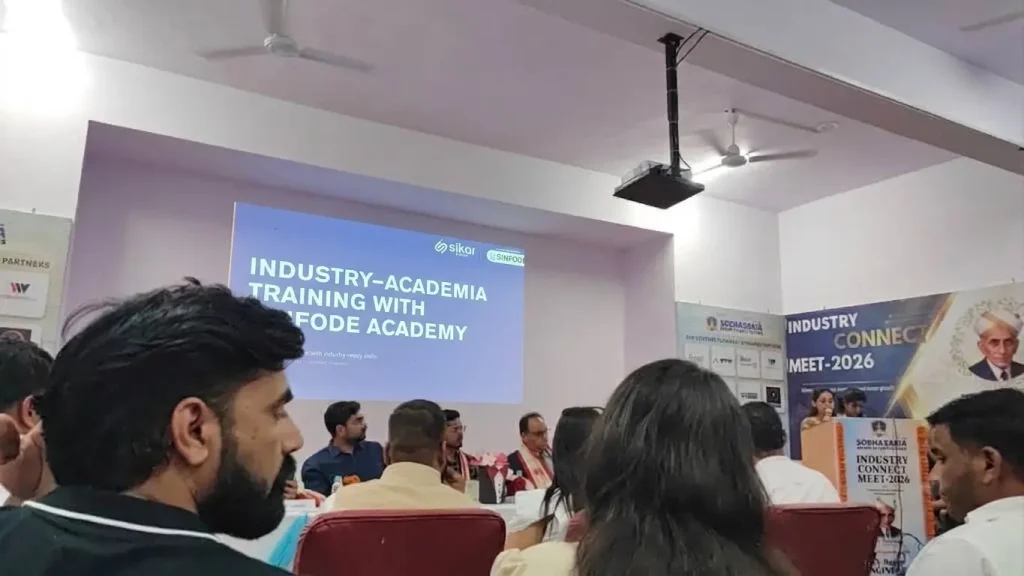
One of the key aspects of this initiative is student interaction.
Direct interaction between students and industry-oriented trainers provides learners with an opportunity to ask questions, discuss career goals, understand workplace expectations, and gain insights into professional life.
For many students, college is the first stage where they begin thinking seriously about their future careers. Interaction with professionals can help them understand what happens beyond the classroom.
Students can discuss questions such as:
- What skills should I develop before graduation?
- How can I prepare for internships?
- What do employers expect from fresh graduates?
- Which additional skills can support my career?
- How can I improve my communication and interview skills?
- How can I become more confident in professional situations?
- What career opportunities are available after engineering?
Such conversations can encourage students to become more proactive about their professional development.
Skill Development for Engineering Students
Skill development for engineering students is becoming an increasingly important part of career preparation.
A degree provides students with academic knowledge, but the modern workplace often requires candidates to demonstrate a combination of technical, digital, communication, and problem-solving abilities.
Students can strengthen their career readiness by developing skills such as:
Technical Skills
Students should continue improving the technical knowledge related to their chosen specialization. Practical projects, assignments, certifications, and hands-on learning can help students understand how theoretical concepts are used in real-world situations.
Digital Skills
Digital transformation has affected almost every industry. Therefore, students can benefit from understanding relevant digital tools and technologies that complement their academic background.
Communication Skills
The ability to communicate ideas clearly is important for interviews, presentations, meetings, teamwork, and client interactions. Students can use college activities and industry interaction sessions to improve their communication skills.
Problem-Solving Skills
Employers often require professionals to analyze situations and develop practical solutions. Students can develop problem-solving abilities through projects, case studies, practical exercises, and real-world examples.
Teamwork and Professional Skills
Teamwork, adaptability, time management, presentation skills, and professional etiquette can also contribute to workplace readiness.
This broader approach to skill development for engineering students helps learners understand that career preparation involves multiple dimensions of professional growth.
Training and Career Guidance for Engineering Students
Effective career preparation should begin well before graduation. Training and career guidance for engineering students can help learners understand their strengths, interests, career goals, and skill requirements.
Students may have different career aspirations. Some may want to work in technology, while others may be interested in management, digital careers, entrepreneurship, analytics, higher education, or other professional fields.
Career guidance can help students explore these possibilities and understand what they may need to do to move toward their preferred career path.
Through training and career guidance for engineering students, learners can become more aware of:
- Career opportunities
- Industry requirements
- Internship preparation
- Placement preparation
- Resume development
- Interview skills
- Professional networking
- Skill gaps
- Career planning
- Continuous learning
The objective is to encourage students to take a more informed and active approach toward their professional journey.
Why a Sinfode Training Partner Matters for Students
The role of a Sinfode training partner can be valuable because it creates an additional connection between students and industry-oriented learning.
Students often understand concepts through textbooks and classroom teaching. However, interaction with trainers can provide another perspective by explaining how skills and knowledge are used in professional environments.
This type of exposure can help students understand the difference between:
Learning a concept and applying a concept in a real-world situation.
For example, a student may know the theoretical fundamentals of a particular subject but may not know how professionals use that knowledge to solve workplace problems.
Industry-oriented training can encourage students to think practically and develop a learning mindset that goes beyond examinations.
Preparing Industry-Ready Engineering Students
Being industry-ready means having the ability to adapt knowledge and skills to professional situations.
Students can start preparing for the workplace during their college years instead of waiting until their final semester.
They can participate in:
- Industry interaction sessions
- Workshops
- Training programs
- Technical projects
- Internships
- Career guidance sessions
- Group discussions
- Mock interviews
- Professional networking activities
These experiences can help students identify their strengths and areas where additional learning may be required.
The Sinfode training partner at Sobhasaria Engineering College initiative can contribute to this process by encouraging students to view professional development as an ongoing journey.
Career Connect: Helping Students Explore Opportunities
Career connect is another important component of student development.
Students often know that they want a successful career but may not have a clear understanding of the steps required to reach their goals. Career-focused interaction can provide them with a structured perspective.
Through career connect activities, students can learn about different professional possibilities and the skills associated with them.
For example, a student interested in a digital career may need to develop digital tools, communication, analytics, and professional networking skills. Similarly, students interested in technology-related roles may need to strengthen their technical capabilities through projects and practical learning.
This makes career guidance more than simply discussing job opportunities. It becomes a process of helping students understand the connection between education, skills, industry requirements, and career goals.
Building Confidence Through Student Interaction
Confidence is another important element of professional development.
Students may have the required academic knowledge but hesitate to communicate their ideas, participate in discussions, attend interviews, or interact with professionals.
Student interaction sessions can provide a comfortable environment for learners to ask questions and express their opinions.
Regular participation in such sessions can encourage students to:
- Speak more confidently
- Ask professional questions
- Present their ideas
- Participate in discussions
- Understand professional etiquette
- Develop networking skills
These experiences can become useful when students eventually attend interviews, internships, placement drives, or professional meetings.
The Importance of Continuous Learning
The professional world continues to change with technological developments, digital transformation, automation, artificial intelligence, and new business models.
As a result, students need to develop a mindset of continuous learning.
Completing a degree should not be considered the end of education. Instead, it can be the foundation for lifelong professional development.
The Sinfode training partner approach can encourage students to recognize the importance of learning new skills and staying updated with changing industry requirements.
Students who develop this mindset during college can become more conscious of their professional growth and future learning requirements.
What Students Can Gain from Industry-Oriented Training
Students can make the most of training and career sessions by actively participating instead of simply attending them.
They can prepare questions related to their career interests, identify skills they need to improve, and seek guidance about internships, projects, resumes, interviews, and professional development.
For example, after an industry interaction session, a student may identify that communication is an area that needs improvement. Another student may realize that they need additional technical certifications or practical project experience.
This self-awareness can turn an individual training session into a long-term career development opportunity.
Sinfode and Sobhasaria Engineering College: Creating a Career-Focused Learning Environment
The collaboration represented by Sinfode training partner at Sobhasaria Engineering College highlights the importance of connecting students with industry-oriented learning.
The purpose of such initiatives extends beyond classroom education. It focuses on creating opportunities for students to interact, learn, ask questions, understand professional expectations, and think about their future careers.
Through skill development for engineering students, learners can work on the capabilities required to navigate a changing professional environment.
At the same time, training and career guidance for engineering students can help learners understand different career paths and prepare themselves for the transition from college to professional life.
Conclusion
The association of Sinfode training partner at Sobhasaria Engineering College represents a meaningful approach toward connecting academic education with practical career development.
Through student interaction, industry exposure, skill development, and career connect, students can gain a broader understanding of what it takes to prepare for the professional world.
The role of a Sinfode training partner goes beyond introducing students to new learning opportunities. It can encourage learners to identify their strengths, improve their skills, understand industry expectations, and develop a continuous-learning mindset.
For today’s engineering students, skill development for engineering students is an important part of becoming professionally prepared. Similarly, training and career guidance for engineering students can help learners make more informed decisions about their future.
By creating opportunities for students to interact with industry-oriented trainers and explore professional expectations, the Sinfode and Sobhasaria Engineering College association contributes to a learning environment where education and career development can move together.
As students prepare for an increasingly competitive and evolving professional landscape, initiatives that connect education, industry exposure, skill development, and career guidance can help create greater awareness about the journey from college to career.
Connect with Sinfode
Are you looking for industry-focused training, skill development, or career guidance? Connect with Sinfode to learn more about our training programs, industry-oriented learning opportunities, and career-focused initiatives.
Sinfode
📞 Phone: +91-9376 306910
🌐 Website: https://www.sinfode.com/
📍 Address: Opp. Sanskrit College, Near Kalyan Circle, Sikar – Rajasthan (332001)
How does Sinfode help engineering students?
Sinfode can support engineering students through industry-oriented training, career guidance, professional skill development, communication activities, and exposure to practical career requirements.
Why is skill development important for engineering students?
Skill development helps engineering students complement their academic knowledge with practical, communication, digital, problem-solving, teamwork, and professional skills required in the workplace.
What is career connect for engineering students?
Career connect refers to career-focused activities that help students understand different professional opportunities, required skills, internships, interviews, networking, and career preparation.
How can students benefit from Sinfode training sessions?
Students can use Sinfode training sessions to improve their professional skills, understand industry expectations, explore career options, identify skill gaps, and develop a continuous-learning mindset.
How does student interaction support career development?
Student interaction provides opportunities to communicate with trainers and professionals, ask career-related questions, discuss goals, and gain practical insights that can support professional development.